The material is recyclable. What happens to a bag at end of life depends on a few things that aren’t on the spec sheet.
.

Mark Moellman
Founder, InterBULK USA
8 min read
Start Here
Yes, but it depends on how you ask the question.
The short answer is yes: bulk bags are made from polypropylene, which is plastic #5 and technically recyclable.
“Technically recyclable” and “gets recycled” are two different things, though, and the gap between them is where most of the real story lives. Plastic #5 is accepted by far fewer programs than #1 (PET) or #2 (HDPE), the bottles and jugs most curbside bins are built around. Woven polypropylene fabric, the material an FIBC is made from, generally needs a commercial or industrial recycler set up to handle it, not a household recycling stream.
What actually happens to a given bag at the end of its life comes down to three things: whether it’s clean enough to recycle, whether it’s been used once or several times before retirement, and whether a recycling stream that takes industrial woven plastic even exists in your area. Those three questions are what the rest of this post is about.
The Bigger Lever
Reuse first, recycling second.
Before recycling even enters the picture, the simplest sustainability win is reuse. A standard single-trip bag is built to a safety factor of 5:1 and is designed to do one job. A UN-certified bag, built to a safety factor of 6:1 and tested through 70 press-and-release lift cycles plus a final cycle at six times its rated load, is built to do the job two or three times over before it’s retired.
That difference is a direct cut in packaging volume per shipment: no extra step, no transport to a processor, no energy spent shredding and re-forming material. A bag that does three trips instead of one is, by definition, a third of the packaging per trip. That’s the math before recycling is even part of the conversation.
Once a bag is genuinely done (whether that’s after one trip or several), clean polypropylene can be processed: shredded into flake, washed, and re-formed into new products. Some current FIBC fabric lines are now made with around 30% recycled PP content, so in some cases that reclaimed material goes back into new bags.
The honest version of this story is that bulk bags aren’t a sustainability problem to apologize for, but they’re not a free pass either. The real lever is using the right bag for the right number of trips, and not over-ordering single-trip bags for work a multi-trip bag could handle just as well, often at a lower cost per use even though the unit price is higher.
Some Context
Bulk bags are already a low-material way to ship.
It’s worth stepping back for a second, because the recycling question can make it sound like FIBCs are a packaging problem looking for a solution. Compared to the alternatives (steel drums, wooden crates, fiber gaylords), a bulk bag is one of the lightest-weight ways to move the same amount of material. An empty FIBC weighs a small fraction of what it carries, where a drum or crate adds significant packaging weight and material to every shipment, full or empty, one-way or returned.
That doesn’t make the end-of-life question irrelevant; it’s still worth getting right. But it’s useful context: the packaging footprint per ton of product moved is already favorable before reuse or recycling are factored in at all. The conversation about bags and sustainability should start from that baseline, not from the assumption that bulk bags are uniquely wasteful.
Putting It Into Practice
Single-trip or multi-trip: how to actually decide.
The reuse math from the last section only pays off if the bag actually gets reused, so the real question is whether your operation is set up for that. A few practical signals point toward a multi-trip, UN-certified bag:
The bag stays within a closed loop, moving between your own facilities or between you and a customer who ships it back, rather than going out the door for good on every trip. The material being handled is consistent enough that the same bag spec works across multiple fills. And there’s a place to store empty bags between trips without them sitting outside, exposed to UV and moisture, which degrades the fabric and shortens how many trips it can actually do.
If those don’t apply (the bag goes to a customer and doesn’t come back, or each job calls for a different bag spec anyway), a single-trip bag built to the standard 5:1 safety factor is usually the right call, and the higher per-unit cost of a multi-trip bag wouldn’t be recovered. Neither answer is wrong; the point is matching the bag to how it’s actually used, which is the same idea from a different angle.
The Process
What actually happens to a bag that gets recycled.
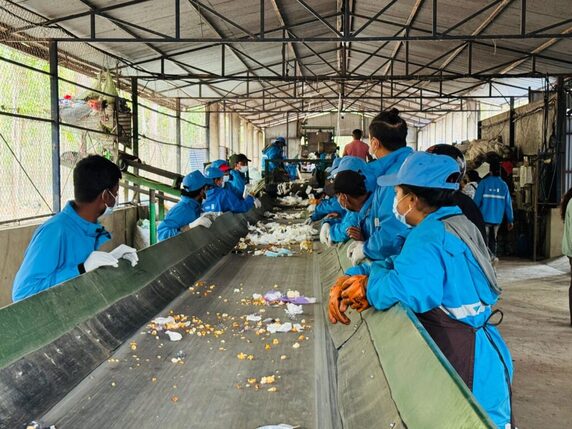
A bag that’s truly done and headed for recycling goes through a specific multi-step process, not just “thrown in with other plastic.”
Sorting & Cleaning
Liners, labels, and anything that isn’t woven polypropylene get removed first. Bags with heavy product residue or non-PP components have to be separated out before reprocessing can even start.
Shredding & Washing
What’s left is shredded into flake, then washed and filtered in multiple stages to remove fine residue and fiber contamination. This multi-stage step is what makes industrial recycling more involved than tossing a bottle in a bin.
Reprocessing Into New Product
Clean PP flake or pellet becomes feedstock for new products: garden furniture, plastic lumber, bins, and in some cases new FIBC fabric itself through recycled-content “eco” lines.
The Practical Reality
Why your recycling bin probably won’t take it.
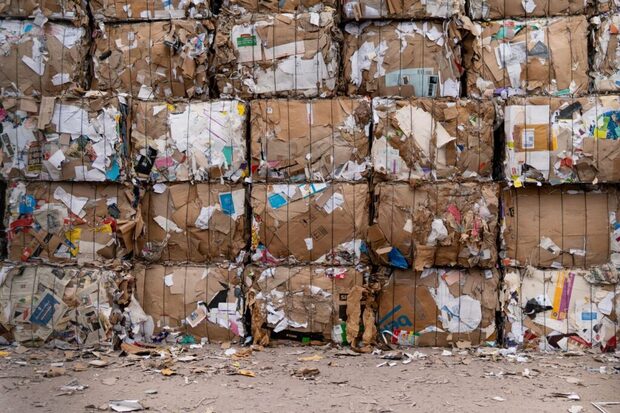
Most municipal recycling programs are built around household packaging: bottles, jugs, film. Industrial woven polypropylene generally isn’t part of that stream. Putting a used bulk bag in with curbside recycling usually just means it gets pulled out at the sorting facility and sent to landfill anyway, which defeats the purpose.
The recyclers that do take this material are commercial or industrial operations set up specifically for woven PP. This is where “clean” stops being a minor detail: a bag with significant product residue, or a liner that wasn’t removed, can get an entire load rejected, because contamination affects the quality of the reclaimed material at scale, not just one bag’s worth.
If recycling end-of-life bags matters to your operation, the realistic path is finding a commercial recycler in your region that handles woven PP or FIBCs specifically, and building bag handling into your process: removing liners, keeping bags reasonably clean, and separating them by type, rather than assuming any bag tossed in a bin will be dealt with. It’s also a fair question to put to your supplier, which is where we’d point you next.
Questions We Actually Get
A few specifics worth clearing up.
Straight answers to the questions that come up most before switching from a standard bag.
Does it matter what was stored in the bag?
Yes. A bag that held a clean, dry, non-hazardous material is a much easier case than one that held something sticky, oily, or hazardous. Residue is one of the main reasons a load gets rejected at a recycling facility, so it’s worth rinsing out or at least knocking loose any product residue before a bag goes anywhere near a recycling stream.
What about the liner, is that recyclable too?
Usually not in the same stream. Liners are typically polyethylene film, a different plastic (#4) than the woven polypropylene (#5) the bag itself is made from. The two need to be separated before either one can be processed, which is one more reason liner removal matters at end of life, not just during use.
Does printing on the bag affect recyclability?
Generally, no: printed woven PP bags are processed routinely. Heavy coatings or laminated finishes can complicate things for some recyclers, but standard printed branding on a bag’s panels isn’t usually a disqualifying factor on its own.
A bag has a torn panel or a broken lifting loop: is it still useful?
Not for reuse. Once a bag fails its safety factor (a torn panel or damaged loop means it can no longer be trusted at its rated load), it shouldn’t go back into service for another trip. But the polypropylene itself hasn’t changed, so a damaged bag is still a reasonable candidate for the recycling stream rather than the dumpster, assuming it’s reasonably clean.
What’s the difference between “recyclable” and “recycled content”?
They’re two different sustainability angles, and it’s worth knowing which one a supplier is talking about. “Recyclable” describes what can happen to a bag at the end of its life. “Recycled content” (often shown as rPP, recycled polypropylene) describes what the bag is made from at the start, and some current fabric lines run around 30% recycled material. A bag can be both, either, or neither, and the spec sheet should say which.
Does a multi-trip bag cost more upfront?
Yes, typically. A UN-certified multi-trip bag costs more per unit than a standard single-trip bag, reflecting the additional testing and certification described earlier (the 70-cycle test plus a final cycle at six times the rated load) and generally heavier fabric. The number worth comparing isn’t the per-bag price, though; it’s the cost per trip. A multi-trip bag used three times at a higher unit price can come out cheaper per use than three single-trip bags, on top of producing less packaging waste over those same three trips.
If we want bags with recycled content, is that something InterBULK can supply?
It depends on the spec. Recycled-content (rPP) fabric is available in some lines, generally around 30% recycled polypropylene, but it isn’t a drop-in option for every product or every safety factor requirement, since recycled material can behave slightly differently under testing. The right way to handle this is the same as any other spec question: tell us what you’re moving and what matters about it, and we can tell you whether an rPP option fits the job.
The Bigger Picture
Why this question is coming up more often.
A few years ago, sustainability rarely came up in a conversation about ordering bulk bags. Price, lead time, and spec were the conversation. That’s shifted, and it’s worth understanding why, because it changes what’s worth asking a supplier.
Companies further up the supply chain, particularly larger manufacturers and retailers, are under growing pressure to report on the environmental footprint of what they buy, not just what they sell. That pressure flows downstream. A purchasing manager filling out an internal sustainability questionnaire needs to know things like whether the packaging they’re buying has recycled content, what happens to it at end of life, and whether reuse is part of the picture. Five years ago, that question might not have come up at all. Increasingly, it’s a line item on a vendor scorecard.
This doesn’t mean every bulk bag order now requires a sustainability audit. Most purchasing decisions are still driven by spec, lead time, and cost, and that’s exactly how it should be. But it does mean that having straightforward answers ready, a recycled content percentage if applicable, whether a multi-trip option exists for the application, and where a bag realistically goes at end of life, is becoming part of what makes a supplier reliable, not just an extra.
That’s really what the two questions below are about. Neither one requires a special program, a new certification, or a change to how you’re currently ordering. They’re simply things worth being able to answer plainly, because the odds of being asked are higher than they were even a couple of years ago, and a supplier who already has the answer saves everyone a round of back-and-forth.
Why It Matters
Three things worth knowing if sustainability is part of your purchasing.
None of this is greenwashing, it’s just where the real impact actually sits.
Polypropylene Is Recyclable, With the Right Stream
The material isn't the limiting factor. Access to a facility that processes industrial woven plastic is.
Reuse Beats Recycling
A multi-trip bag doing two to three jobs before retirement cuts packaging volume more directly than recycling a single-trip bag after one use.
The Right Bag for the Job Is the Sustainability Decision
Matching bag type to actual usage (single trip vs. multi-trip) has more impact than any single end-of-life choice.
Common Questions
What people ask about recycling bulk bags.
Straight answers to the questions that come up most about end-of-life disposal.
Are bulk bags recyclable?
Yes. Bulk bags are made from polypropylene, a recyclable plastic, and can be processed back into raw material once they’ve reached the end of their useful life. The honest caveat is that recyclable doesn’t mean your curbside program will actually take one.
What plastic are bulk bags made from?
Woven polypropylene, plastic number 5 on the resin identification code. It’s the same general plastic family used in things like yogurt containers and bottle caps, just woven into fabric instead of molded into a rigid shape.
Can I put a used bulk bag in my curbside recycling bin?
No, in almost every case. Curbside programs are built for rigid containers, not flexible woven fabric, and a folded bulk bag can jam sorting equipment at a materials recovery facility. Bulk bags need to go through a specialized industrial recycler, not a household bin.
What happens to recycled bulk bags?
Used bags are shredded, washed, and reprocessed into raw polypropylene pellets. Those pellets get remanufactured into products like plastic lumber, bins, brooms, automotive parts, and in some cases new bags or other plastic packaging.
How many times can a bulk bag be reused before it's recycled?
It depends on the safety factor. A standard 5:1 bag is built and tested for one trip and should be recycled after that single use. A 6:1 multi-trip bag can be reused multiple times, as long as it passes inspection before each reuse, before it’s eventually retired and recycled.
Why won't my local recycler take a bulk bag?
Volume and equipment. Most municipal recyclers aren’t set up to handle large flexible plastic items in any quantity, and specialized industrial recyclers that do take bulk bags usually require a minimum volume to make a pickup worthwhile. This is why recycling bulk bags is mostly practical for businesses that go through a lot of them, not for a one-off bag.
Worth Thinking About
Two questions worth asking your supplier.
If sustainability reporting is part of your purchasing process, both of these are answerable, and worth getting in writing.
Is this a single-trip or multi-trip bag, and is a multi-trip option available for this job?
If we wanted to recycle these bags at end of life, where would they actually go, and what condition would they need to be in?
Want a straight answer on bag options?
Whether it’s reuse, recycled content, or just the right bag for fewer trips, tell us what matters for your operation and we’ll talk through the options.